WHEN LORETTA LYNN AND CONWAY TWITTY WANTED TO RECORD TOGETHER, ALMOST EVERYONE IN THE BUSINESS TOLD THEM NO — EXCEPT LORETTA’S HUSBAND.
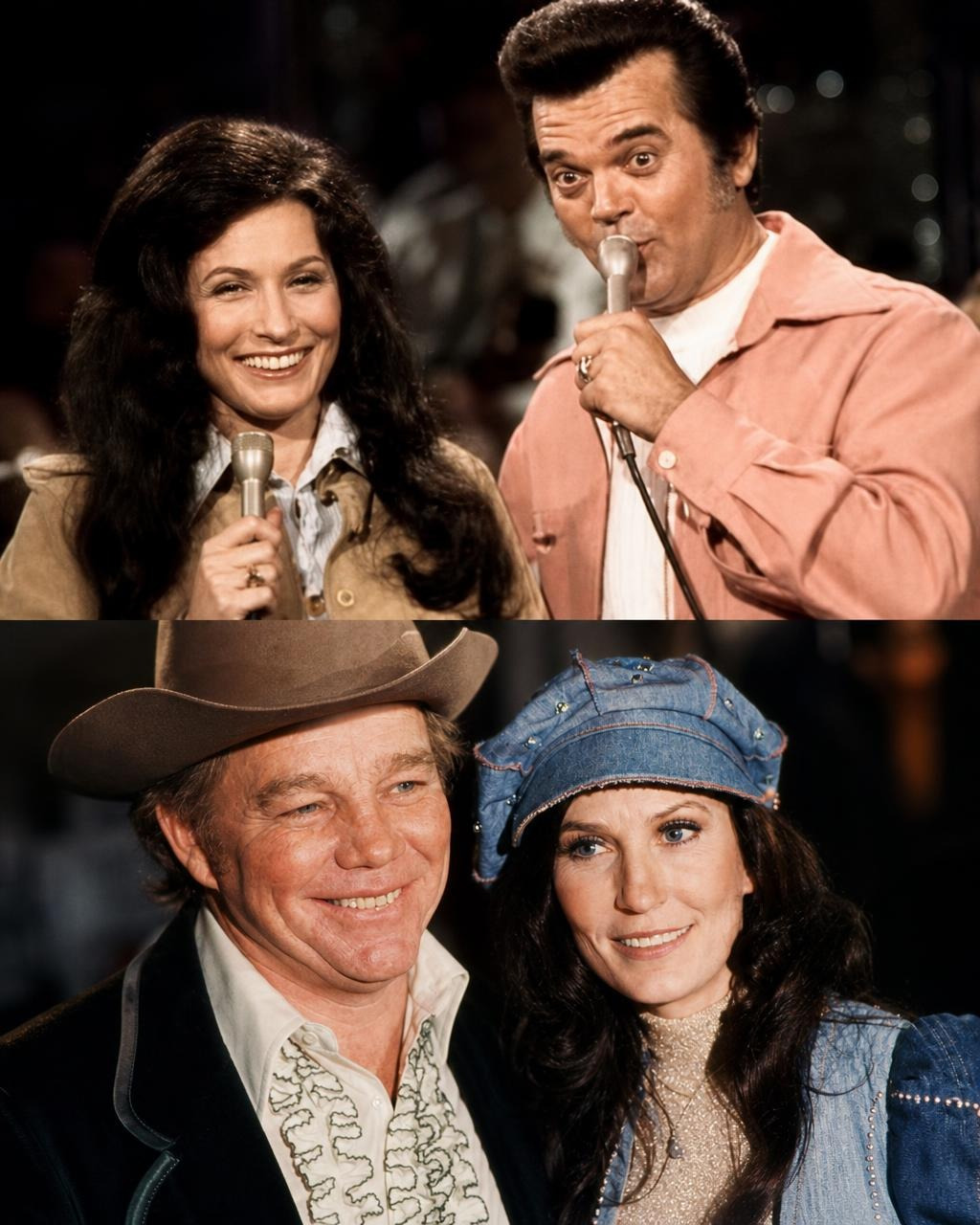
When Loretta Lynn and Conway Twitty first talked about making music together, the idea did not sound safe, tidy, or even especially businesslike. They were both already stars. They were also on different labels. And in the country music world, that kind of pairing could have seemed like a headache waiting to happen. But Conway Twitty later said the idea made sense to him, to Loretta Lynn, and to Loretta Lynn’s husband, Doolittle Lynn — and to hardly anyone else.
That did not stop them.
Their first big duet, “After the Fire Is Gone,” became a breakout moment. It reached No. 1 in March 1971 and earned them a Grammy, opening the door to one of the most successful duet partnerships in country music history. Soon after, the hits kept coming. Songs like “Lead Me On” and “Louisiana Woman, Mississippi Man” helped build a run that fans still remember with almost mythic affection.
But success brought a strange kind of gossip. The songs were often about longing, heartbreak, and the emotional aftermath of love. Because Loretta Lynn and Conway Twitty sang them so convincingly, listeners began to wonder if the chemistry on record had to mean something offstage too. Rumors followed them for years, even as the pair kept doing what they did best: singing, touring, and winning. Between 1972 and 1975, Loretta Lynn and Conway Twitty won four consecutive CMA Vocal Duo of the Year awards, and they collected five No. 1 singles together along the way.
Still, the story that outlasted the rumors was not about scandal. It was about trust.
Loretta Lynn often said that Doolittle Lynn loved Conway Twitty. She also remembered a moment in 1973 that sounded almost like a country song in itself. After a couple of weeks on the road, Loretta Lynn and Conway Twitty came home and found Doolittle Lynn sitting at the office desk, something he almost never did. He told them he had a song for them. Conway Twitty, according to Loretta Lynn, could hardly believe Doolittle Lynn had found anything that would work.
The song was “Louisiana Woman, Mississippi Man.” It went to No. 1.
That was the turning point Loretta Lynn remembered most clearly. From then on, she said, they started listening to Doolittle Lynn.
Sometimes the person everyone doubts is the one who sees the hit first.
In the end, the duet partnership between Loretta Lynn and Conway Twitty was not built on gossip or image. It was built on timing, instinct, and a husband who trusted the music enough to step forward with an idea. The public may have whispered, but the records kept speaking for themselves.
And that is why the story still lasts: two legends, one unlikely partnership, and a third voice in the room that helped make it all possible.