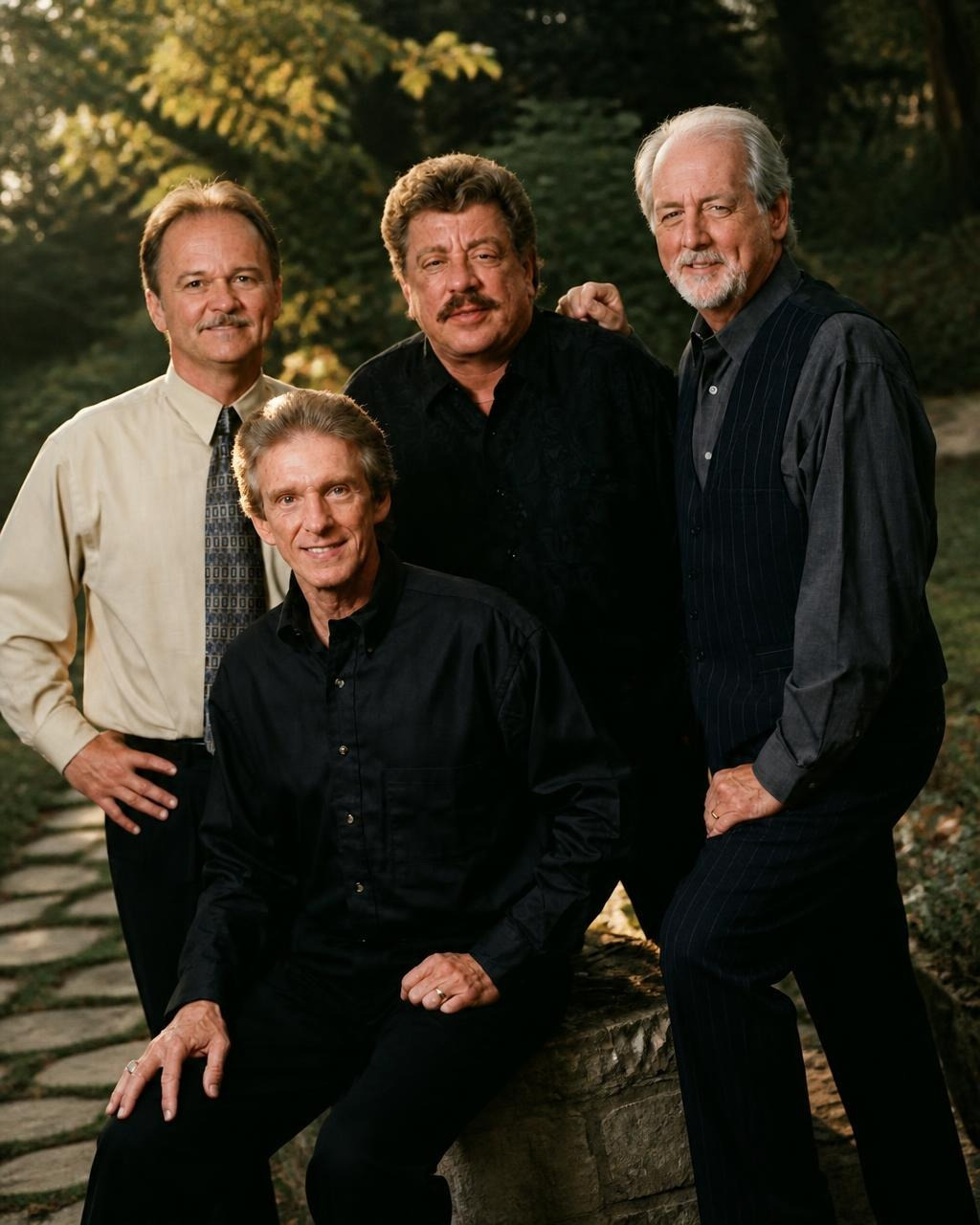
Merrill Osmond: Trump ‘is a really nice guy’ but was ‘never really a fan of how he spoke’
Watch the video at the end of this article.
Introduction

Nuance in Political Opinions: Merrill Osmond on Donald Trump
In an era defined by intense political polarization, public figures often find themselves pressured to take absolute stances—either fervently supporting or vehemently opposing political leaders. However, veteran American singer Merrill Osmond, best known as the lead vocalist and bassist of the legendary family pop group The Osmonds, provided a remarkably nuanced perspective during an interview with the British news outlet GB News. Reflecting on his personal interactions with former U.S. President Donald Trump, Osmond offered a candid assessment that highlights a common sentiment among moderate conservative voters: while he viewed Trump personally as a “really nice guy,” he admitted he was “never really a fan of how he spoke”.
Osmond, who has openly identified himself as a deeply conservative individual with strong faith-based values, shares a history with Donald Trump that predates his presidency. Over the decades, their paths crossed multiple times due to Osmond’s high-profile entertainment career and philanthropic work. Speaking from direct personal experience, Osmond praised Trump’s private demeanor, describing him as warm, polite, and respectful behind closed doors. He noted that off-camera, Trump demonstrated genuine hospitality and kindness—qualities that often get lost in the sea of media coverage surrounding his public persona. For Osmond, these personal encounters proved that beneath the larger-than-life, confrontational media brand lies a personable human being.
Despite this positive personal impression and a shared conservative philosophy, Osmond did not shy away from voicing his discomfort with Trump’s public rhetoric. Trump’s political rise has been defined by an unfiltered, aggressive speech style—one marked by sharp jabs, boisterous claims, and relentless attacks on critics. For someone like Merrill Osmond, who was raised in a highly structured, family-centric, and faith-oriented environment, this harsh delivery style often clashed with his personal values. Osmond acknowledged that while he might align with many conservative policies, the abrasive tone and inflammatory language Trump frequently utilized were difficult to embrace. He felt that public service requires a degree of decorum and presidential dignity that Trump’s bombastic communication style frequently lacked.
This duality in Osmond’s reaction reflects a broader dilemma faced by millions of conservative voters globally. It separates a leader’s character in private and policy goals in public from their chosen method of delivery. For many, Trump’s unfiltered rhetoric was seen as an endearing sign of authenticity and a refusal to bow to political correctness. For others, including traditional conservatives like Osmond, it represented an unnecessary distraction that undermined the solemnity of the presidency.
Ultimately, Merrill Osmond’s commentary offers a refreshing reminder that political commentary does not always have to be black and white. One can acknowledge a person’s positive traits and agree with their core principles while simultaneously criticizing their behavior or communication style. By stating that Trump is a “nice guy” while admitting he was “never a fan of how he spoke,” Osmond illustrated the complex, balanced thinking that often gets lost in modern political debate. His honesty serves as a testament to evaluating leaders through a lens of nuanced realism rather than blind allegiance.